


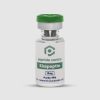
KPV (50mg) High-Purity Anti-Inflammatory and Immunomodulatory Peptide for Research Use
KPV (50mg) is a research-grade tripeptide (Lys-Pro-Val) derived from the C-terminal region of alpha-Melanocyte-Stimulating Hormone (α-MSH). It has been widely studied for its anti-inflammatory, gut-protective, and cellular repair properties in laboratory environments. KPV acts by interacting with melanocortin receptors (MC1R) and modulating key inflammatory signaling pathways.
Product Overview KPV’s mechanism of action involves suppressing NF-κB activation and reducing the production of pro-inflammatory cytokines. In research settings, it has demonstrated relevance in studies of epithelial protection, oxidative stress regulation, and immune cell balance. Its natural origin, coupled with stability and versatility, makes KPV an essential model for immunological, gut, and skin research.
Key Research Attributes:
- Anti-Inflammatory Action: Investigated for its ability to downregulate TNF-α, IL-6, and NF-κB activity in vitro.
- Gut and Epithelial Studies: Commonly used in intestinal permeability and mucosal protection models.
- Immune Regulation: Explored for its effects on macrophage polarization and innate immune signaling.
- Skin and Tissue Repair: Studied in keratinocyte and dermal models to evaluate cellular protection and wound repair potential.
- High Purity & Stability: Lyophilized and validated at >99% purity for reproducibility across biochemical and cellular studies.
Applications in Scientific Research
- Inflammatory response and immune regulation studies
- Gut and intestinal barrier research
- Skin healing and epithelial cell function assays
- Oxidative stress and cytokine modulation models
- Melanocortin receptor pathway exploration
Format and Storage Form: Lyophilized powder Purity: >99% Molecular Formula: C17H32N4O4 Molecular Weight: 356.47 g/mol Storage: Store at -20°C for optimal stability Reconstitution: Use bacteriostatic water for solution preparation
Disclaimer: KPV (50mg) is intended for laboratory research use only. It is not for human or veterinary use. All studies must adhere to institutional and regulatory guidelines.
Chemical Makeup
Sequence: Lys-Pro-Val
Synonyms: KPV Tripeptide, α-MSH (11–13), Anti-Inflammatory Peptide
Provided strictly for laboratory and research purposes. Please review our Terms and Conditions before placing an order.
MORE INFORMATION
| Purity Percentage | 99% Purity |
|---|---|
| Volume | 50MG |
| Bought This Week | 10 |
| New | Yes |
| Sale | Yes |
KPV (50mg): Research Overview, Anti-Inflammatory Mechanisms, and Immunomodulatory Activity
KPV (Lys Pro Val) is a tripeptide fragment derived from the C-terminal region of α Melanocyte Stimulating Hormone (α MSH). It has been widely studied as a model for anti-inflammatory action, epithelial protection, and immune modulation. Research demonstrates its potential relevance in gut barrier integrity, cytokine signalling, oxidative stress response, and cutaneous repair.
-
KPV and α MSH Anti-Inflammatory Pathways Reviews KPV’s influence on NF κB activity, pro-inflammatory signalling suppression, and melanocortin receptor interactions. Read more
-
Intestinal Protection and Gut Barrier Studies Summarise experimental findings on epithelial reinforcement, colitis model recovery, and permeability regulation. Read more
-
Cytokine Modulation and Inflammatory Signalling discusses evidence of reduced TNF α, IL 1β, IL 6, and other inflammatory mediators following KPV exposure. Read more
-
KPV in Skin Repair and Wound Closure Examines keratinocyte activation, reduced inflammation, accelerated closure, and dermal restoration in tissue models. Read more
-
Macrophage Polarisation Research Reviews KPV’s potential ability to shift macrophage activity from inflammatory (M1) patterns toward regulatory (M2) states. Read more
-
Epithelial Models and Antioxidant Mechanisms provides insights into oxidative stress buffering, epithelial transport signalling, and immune co-culture interactions. Read more
Disclaimer: KPV (50mg) is supplied strictly for laboratory research use only. It is not designed for human or veterinary application. All experiments must follow institutional and regulatory guidelines.
| Quantity | 3 Vials, 6 Vials, 9 Vials |
|---|
Be the first to review “KPV (10mg)”
Related products

DNA Cell Research Peptides

DNA Cell Research Peptides

DNA Cell Research Peptides

DNA Cell Research Peptides
DNA Cell Research Peptides

DNA Cell Research Peptides
DNA Cell Research Peptides

DNA Cell Research Peptides
Reviews
There are no reviews yet.